

From Paper to Mobile Apps: The Evolution of the Lottery Ticket Format
Lottery tickets have changed more in the last 30 years than in the previous century. What began as a printed slip bought at a local shop is now often a QR code on a phone, an entry stored in an account, or even a digital receipt confirmed by email. This evolution has not been cosmetic: the ticket format has shaped how lotteries fight fraud, manage payouts, protect players, and meet modern expectations around convenience and security.
The Paper Ticket Era: Why It Dominated for So Long
For decades, paper tickets were the backbone of national and regional lotteries. They were cheap to print, easy to distribute, and simple for players to understand: you paid, received a physical ticket, and kept it safe until the draw. In many countries, paper ticket sales were closely tied to everyday retail habits, with lottery products sold at newsagents, supermarkets, petrol stations, and kiosks.
The format also matched how lottery systems were built. Retail terminals printed tickets with draw details, selection numbers, timestamps, retailer IDs, and validation codes. Behind the scenes, central systems registered each transaction, but for the customer the ticket itself was the “proof” of participation. That physical proof became both the strength and weakness of paper: it was tangible, but it could be lost, damaged, or stolen.
By the late 1990s and early 2000s, most established lotteries had introduced additional layers such as barcodes, serial numbers, and security inks. These were responses to forgery attempts and disputes about ownership. Even with those improvements, paper still required manual handling—presenting the ticket at a retailer, waiting for scanning, and relying on the ticket’s condition for validation.
Security and Verification in the Paper Format
Paper ticket security developed in practical steps. The earliest systems relied on printed details and store records, but modern paper tickets (as of the 2020s) typically include machine-readable barcodes or QR codes that link the ticket to a transaction stored in the lottery’s database. This means the printed slip is not the only record, but it still acts as the key for claiming most prizes.
Anti-counterfeit features became more common as prize pools and sales volumes grew. Depending on the lottery, these can include microtext, ultraviolet marks, heat-sensitive inks, and complex background patterns designed to prevent easy copying. The goal is to ensure that a ticket can be validated quickly at retail level while making fraud expensive and difficult.
Ownership disputes have always been more complicated with paper. If a winning ticket is found, proving who bought it can be difficult unless the player used a loyalty card or registered purchase system. That limitation became one of the drivers for digital formats, where identity and ticket ownership are tied to accounts rather than to a piece of paper.
The Rise of Hybrid Tickets: Barcodes, QR Codes, and Scan-to-Check Tools
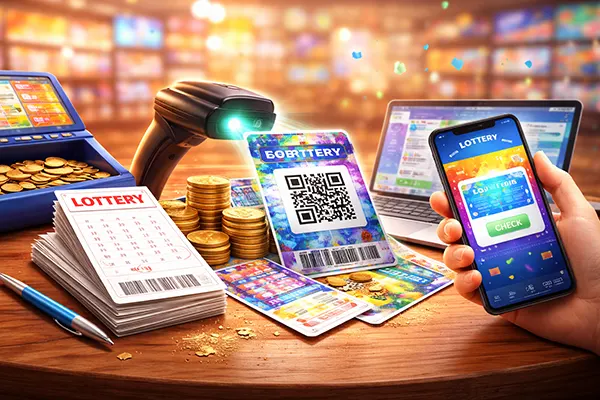
As smartphones became mainstream, lotteries started blending physical and digital experiences. Hybrid formats did not remove paper immediately, but they changed how players interacted with tickets. A key development was the widespread use of QR codes on printed tickets and scratchcards, enabling quick verification and easier access to results.
Scan-to-check functions became common through official lottery apps. Instead of waiting at a retailer or manually comparing numbers, players could scan a ticket using a phone camera to see whether it had won and, in some systems, whether it needed to be claimed online or in person. This reduced routine retailer checks and helped players avoid missing smaller wins.
Hybrid systems also improved customer support and dispute handling. When a ticket scan is linked to official systems, lotteries can show draw history, validation outcomes, and claim instructions instantly. By 2025, many lotteries use these tools to reduce queues, support responsible participation reminders, and provide safer verification than relying on unofficial result sites.
How Digital Layers Changed the Meaning of “The Ticket”
In hybrid models, the ticket is no longer just what is printed—it is a reference to a stored transaction. The barcode or QR code acts like a key, while the central system acts as the source of truth. That shift matters because it allows lotteries to reduce dependence on the physical ticket for internal verification, even if the customer still needs it for certain claims.
This approach also supports better analytics and operations. Lotteries can track sales patterns by product, region, and time, making it easier to plan distributions and prevent stock issues. From a security perspective, it becomes harder to create convincing fake tickets because verification depends on matching a real stored record.
However, hybrid formats create new expectations. Players may assume scanning is “registration” or that an app scan guarantees a ticket is saved to their account, which is not always true. Responsible lotteries usually explain clearly whether scanning is only for checking results or whether it also links the ticket to a player profile for safer prize claims.
Fully Digital Tickets: Accounts, E-Receipts, and App-Based Entries
By 2025, fully digital ticketing is a standard offering in many regulated lotteries, particularly for draw-based games. Instead of printing a ticket at the point of sale, the player buys an entry online, receives a digital confirmation, and the ticket exists primarily as a record inside an account. The player’s proof of purchase becomes a transaction history, a digital receipt, or an email confirmation.
Digital entries solve several long-standing problems. Losing a ticket is far less likely when the entry is stored in an account. Checking results is usually automatic, and many systems notify players of wins. For smaller prizes, winnings can be credited directly to the account balance, reducing the need for retail claims.
Digital formats also help lotteries meet compliance requirements. Age verification, location restrictions, and identity checks can be integrated into registration and payment steps. This is especially relevant in countries where regulators require stronger controls over who can participate, how funds are handled, and how problem gambling tools are offered within official lottery services.
What Digital Ticketing Means for Players in 2025
The biggest practical change is that ownership becomes clearer. An online entry is attached to a verified account, which reduces disputes about who bought the ticket. It also improves protection against theft: someone cannot simply pick up a winning ticket and claim it without access to the account or identity checks for larger payouts.
Digital ticketing also changes how players manage routines. Subscriptions and saved number sets are common, so people can participate in recurring draws without repeated purchases. That convenience can be positive, but it also requires clear spending controls. Many lottery apps now include deposit limits, spending summaries, and reminder tools to help players stay in control.
At the same time, paper has not disappeared. In many regions, cash-based purchases and retail access remain important for inclusion, especially for people who prefer not to register online. The modern reality is mixed: lotteries increasingly support both formats, allowing players to choose between physical slips, scan-enabled tickets, and account-based digital entries depending on their needs.