
Why Many People Have Lucky Numbers and Where This Habit Comes From
Across different cultures and generations, people have attached special meaning to certain numbers. Some choose specific dates when buying lottery tickets, while others prefer particular house numbers, telephone numbers, or seat numbers when travelling. The idea of a “lucky number” is so widespread that it appears in everyday life around the world. Although there is no scientific evidence that any number can influence future events, psychologists, historians, and behavioural researchers have spent decades studying why people develop these preferences and why the habit remains so common in modern society.
The Historical Origins of Lucky Numbers
The connection between numbers and human beliefs can be traced back thousands of years. Ancient civilisations in Mesopotamia, Egypt, China, Greece, and Rome often associated numbers with religious concepts, natural phenomena, or cosmic order. Certain numbers were considered symbols of harmony, prosperity, or protection, while others were viewed with suspicion.
In many societies, numerical symbolism became deeply embedded in cultural traditions. The number seven, for example, appears repeatedly in religious texts and folklore. Ancient observers linked it to the seven visible celestial bodies known at the time, which contributed to its reputation as a special number in many regions.
These beliefs were passed from generation to generation through stories, customs, and rituals. Even when societies became more scientifically advanced, traditional associations with specific numbers often remained part of everyday culture. Many people today continue to inherit numerical preferences from family members without fully considering their historical origins.
How Different Cultures View Certain Numbers
Cultural attitudes towards numbers vary significantly around the world. In China, the number eight is widely associated with prosperity because its pronunciation resembles words connected with wealth and success. As a result, combinations containing the number eight are often considered desirable.
In contrast, the number four is frequently avoided in several East Asian countries because its pronunciation can resemble the word for death. This belief has influenced building design, hotel floor numbering, and consumer behaviour in certain regions.
Western cultures have developed their own traditions. The number seven is often viewed positively, while thirteen has historically been associated with bad luck in some countries. These examples show that lucky numbers are rarely universal. Instead, they are shaped by language, history, religion, and local traditions.
The Psychological Reasons Behind Lucky Numbers
Modern psychology offers several explanations for why people become attached to specific numbers. One of the most important factors is pattern recognition. Human brains naturally search for connections and meaning, even when events occur randomly. When a person experiences a positive event associated with a particular number, they may begin to view that number as significant.
Confirmation bias also plays an important role. People tend to remember occasions when their chosen number appeared before a favourable outcome while overlooking the many times it had no apparent effect. Over time, these selective memories can strengthen belief in the number’s importance.
Another factor is emotional attachment. Numbers linked to birthdays, anniversaries, important achievements, or family traditions often gain personal significance. The number itself may not possess any special properties, but the memories connected to it create a lasting emotional connection.
Why Lucky Numbers Feel Meaningful
Researchers have found that personal rituals can increase confidence and reduce uncertainty. Choosing a familiar number before making a decision can provide a sense of comfort, even when the outcome is entirely beyond a person’s control.
This effect is especially noticeable in situations involving chance, such as lotteries, sports predictions, or games of probability. Many individuals prefer selecting their own numbers because the process creates a feeling of involvement and personal choice.
Studies conducted in behavioural psychology suggest that rituals and symbolic actions may help people manage stress. While the chosen number does not change the odds of an event, it can influence how confident or optimistic a person feels about the situation.
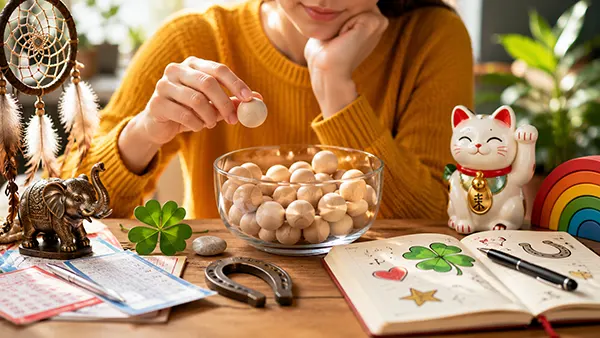
Lucky Numbers in Modern Society and Popular Culture
Despite advances in science and education, lucky numbers remain highly visible in contemporary society. Businesses sometimes incorporate specific numbers into branding, product launches, or marketing campaigns when they believe customers attach positive associations to them.
The influence of lucky numbers is also evident in property markets. In several countries, homes or vehicle registration plates containing certain number combinations may attract greater demand. In contrast, combinations viewed negatively can sometimes reduce interest among buyers.
Digital technology has not diminished these traditions. Social media, online communities, and global communication have allowed cultural beliefs about numbers to spread more widely than ever before. As a result, people are often exposed to numerical traditions from countries and cultures other than their own.
Will People Continue Believing in Lucky Numbers?
Current evidence suggests that lucky numbers are unlikely to disappear completely. They satisfy psychological needs related to identity, memory, tradition, and personal meaning. Even individuals who do not genuinely believe in luck may still prefer certain numbers because they feel familiar or comforting.
Researchers generally agree that lucky numbers are best understood as cultural and psychological phenomena rather than objective forces that influence outcomes. Their popularity reflects how humans naturally search for meaning and patterns within everyday experiences.
As of 2026, lucky numbers remain a fascinating example of how ancient traditions continue to influence modern behaviour. Whether linked to family history, cultural customs, or personal experiences, these numbers continue to hold symbolic value for millions of people around the world.